No You Cannot Touch My Hair!

“Can I touch your hair?” To which I reply, “No thank you, I already had my lunch for the day.” The last part leaves them in confusion and gives me time to walk away.We all have our limits.
Many people know that a Black woman’s hair is her crown and glory. For my mother, that was very much the case. She loved her hair — how thick and full it was. She always got so many compliments about it. My mother never wore wigs or weaves. She was so proud of her hair. She would straighten it and put rollers at the ends so it always had this bouncy way of moving with her as she navigated life. I remember watching her as she got ready. She would first start with her makeup. She always used the same bright red lipstick on her lips, and then she would rub it on her cheeks and dab it in with her fingers. Then she would remove her rollers. I don’t remember her wearing a bonnet — a bad habit I would later pick up myself when going to bed.
A Black woman should wear a bonnet when asleep, I am told. I just at times find it hard to keep one on my head. I toss and turn and move so much that it feels laborious to keep the darn thing on. I am trying to get better, but for now a silk pillowcase will have to do. I even make my lovers have one waiting for me, as if to announce, my queen has arrived and here is the place where she shall lay her head. For now a silk pillowcase should do. I’ve noticed even other women besides Black women have started to use them. For one thing, they keep wrinkles off the face. Black don’t crack, in part, due to that. And they keep the hair smooth without feeling like you have to encase your whole head in cloth. That’s what it felt like to me — having to wrap my head every night seemed cumbersome, and I’d rather just pass out on the pillowcase. My mother had her own reasons, or maybe I never saw her take it off. I was always watching during my favorite part. I watched her take out her rollers and then take a brush and brush out the curls so they bounced and flowed down her back like water running uninterrupted down a brook.
When she got cancer, the chemo took her hair. That was the only time I saw her cry. I am sure there were others, for cancer is a nasty thing that seems bent on causing misery wherever it goes. She started losing hair in strands at first, and then in clumps. A woman bent on winning the fight, she began keeping the hair in bags around the house. It made me sad to see. She tried for as long as she could to cover up the patches in her head, but she was finally convinced to shave it. She was a proud woman like that. She probably felt the longer she held off, God would reward her and bring her hair back. He did not, for God does not care about vanity or the things we hold so dear. God is selfish like that and only cares about Himself. I have scolded Him many times about this, but He laughs and I quiet.
My mother always kept her hair straightened and encouraged us to do the same. It reminds me of a saying I once heard about Black folks straightening their hair to make white people comfortable. Or was it ourselves we were trying to make comfortable? I am not sure anymore. I wore mine straight for years — perms and hot combs. I remember when my mom would hot comb my sisters’ and my hair. She would do it in order from oldest to youngest. Since we were triplets, it was whoever came out first and then the last. I was the baby so I got to go last. I remember watching my sisters wince or cry from the heat and when the grease popped up and burned them. We hated the process, but oh how we felt ourselves afterward. Our har flowing so straight and long down our backs. Our hair had always been long like our mother’s — something kids would bully us about. It led to me having my hair cut by a mean black girl at school once. I cried so hard as I held the piece of hair she snipped off in my little shaky hands. What would behoove a child to do such a thing, I will never know. But one thing I did know was that hair was important to my community. It determined status and beauty to some. I know that to be inaccurate. Beauty comes from within, and some of the most beautiful women I saw were bald. I look back on the years I wore my hair straight and the weaves I wore and sigh with relief. I didn’t hate myself, but I was hiding who I was. I was free, fun, and wild and my hair matched every bit of who I am, and I am grateful for that now. I ultimately stopped because I grew tired of the maintenance, and my workout life couldn’t support it.
I still sometimes look upon the crown on my head with a bit of indifference and hesitation. Society has done enough brainwashing that it seems impossible to fight off the notion of “good hair.” These thoughts are more prevalent when I am in a relationship, primarily an interracial one. My hair becomes an annoyance and a chore that I must master in order to be loved. I often spin out of control with what to do with it — braids, weave, ponytail, or should I just altogether shave my head? I have been told to shave it from a voice once or twice, but I am good at ignoring the voices now, so I try to figure out what it is I want to do next.
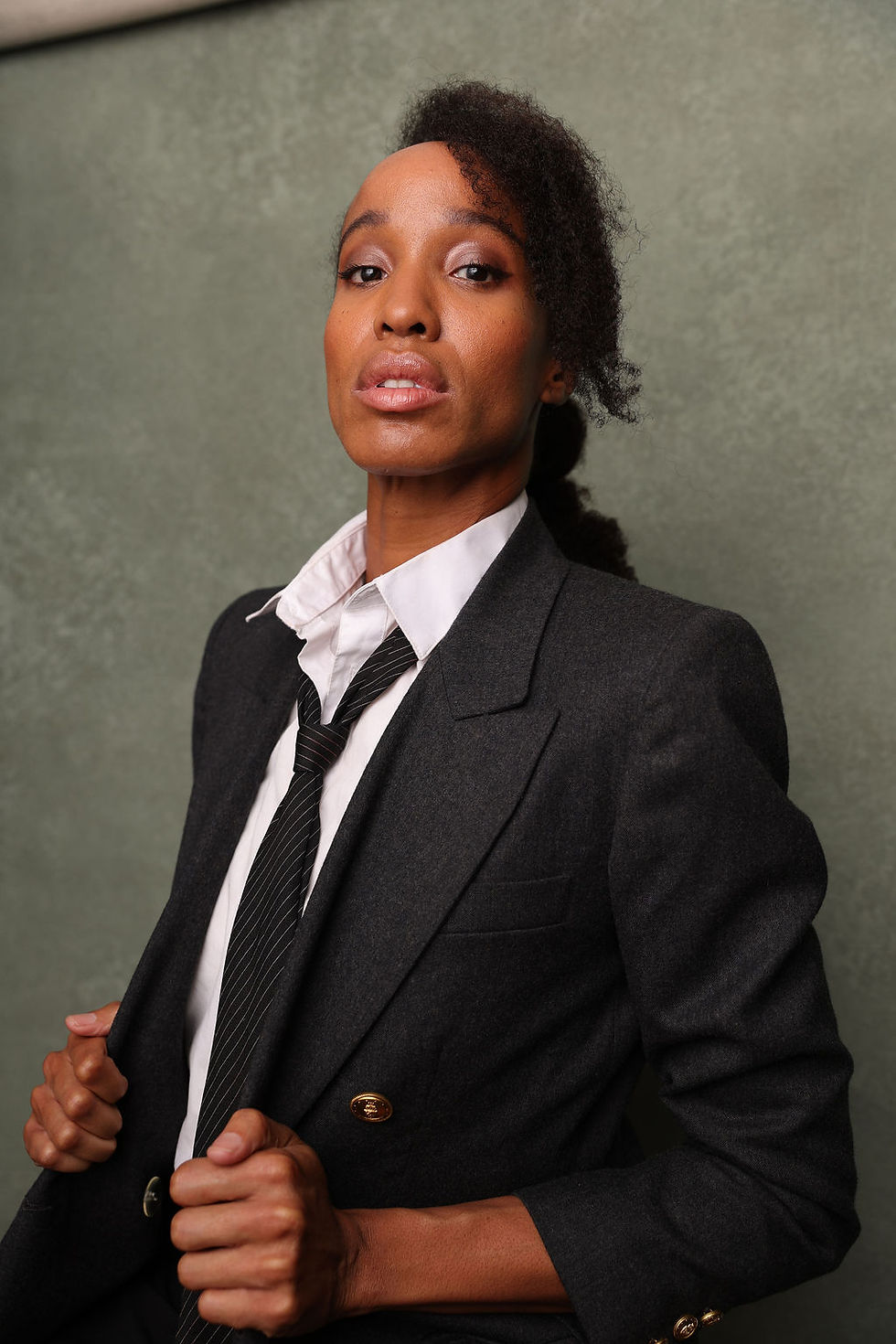
I wear my hair natural now. Sometimes I put a hat on when I’m out and about because my afro tends to attract — how do I say this — a lot of white hands. Specifically, white women love to come up and just touch my hair without permission. They often catch me off guard and I stumble back trying to avoid their unwashed hands. I know it’s not malicious but curiosity, still it makes me frown. It could be called dull hair syndrome. Something I came up with. When you yourself have hair you are told is good but notice it lacks flair and personality, you covet something different. So I guess when they see mine, or other Black women’s hair, they can’t help but reach for it or ask the most awkward question: “Can I touch your hair?” To which I reply, “No thank you, I already had my lunch for the day.” The last part leaves them in confusion and gives me time to walk away.We all have our limits. Mine is being touched in that way.
My hair is my crown, and I am proud to be the wearer of it.


Comments